Three Lives.
One Colony.
Worker. Queen. Drone. Three lives of the honey bee – and one shared life within the colony.
Something Lives in the Dark
In the darkness of a beehive, tens of thousands of bodies live so closely together that something distinct emerges from the many individuals.
One Colony.
Thousands of wings move the air inside it. Thousands of muscles keep its brood warm. It stores summer in honeycomb and carries its future in tiny eggs.
Three forms shape this life.
One will work until her wings wear out.
One will place the future into the cells, egg by egg.
One will fly out to pass on his genes – and may die at the very moment he succeeds.
Worker. Queen. Drone.
Three bodies. Three destinies. One shared life.
The Life of a Honey Bee
File: Apis mellifera, worker, born to serve the colony
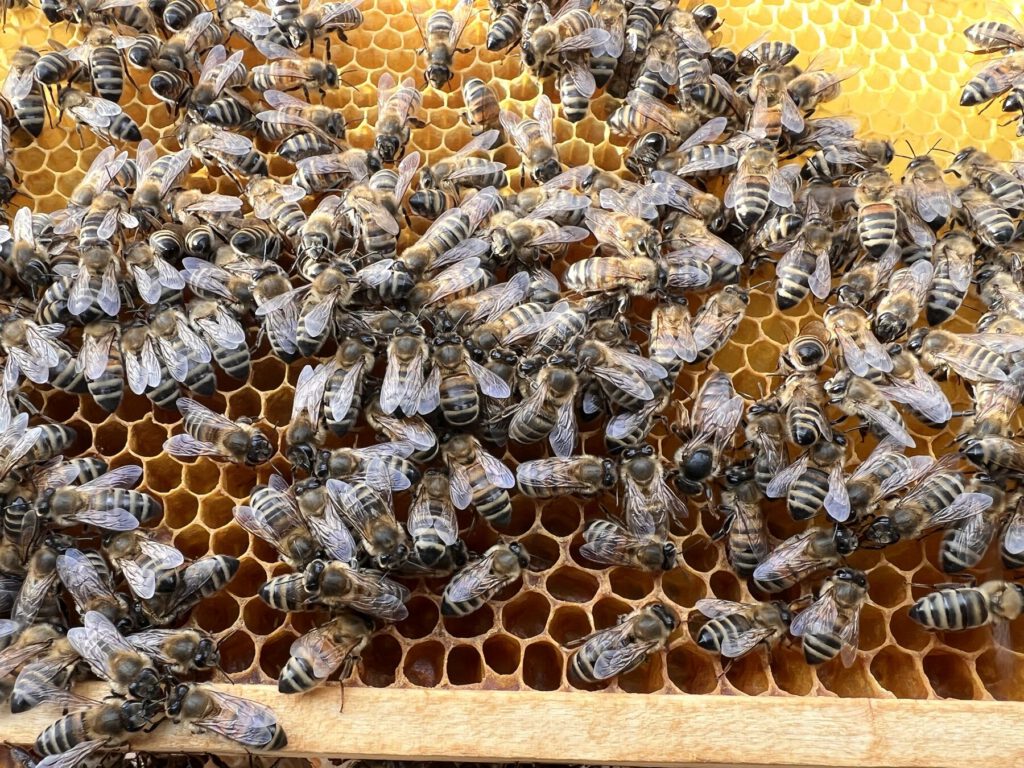
I will not grow old. I will be needed.
A note on counting: day 0 is the day the egg is laid. On day 21, I emerge as a fully formed worker. Only then does my visible working life in the colony begin. Every day mentioned here is counted from that tiny egg.
My Beginning: 21 Days to Become a Worker
Day 0: The queen lays me in a prepared cell as a tiny white sliver. I do not look like a heroine yet. But from this moment, the colony’s clock is ticking.
Days 1 to 3: My development begins inside the egg. Everything looks still from the outside, but my first transformation has begun.
Day 3: I hatch from the egg, but not yet as a bee. I am a blind, hungry larva.
Days 3 to 6: Nurse bees feed me brood food. Yes, even as a future worker I receive this precious start. But only briefly.
Days 6 to 9: My diet gradually changes to worker food made from honey, nectar, pollen and bee bread. This is where my path separates from that of a queen.
Day 9: My cell is capped. The door closes. Darkness, warmth, transformation. There is no turning back.
Days 10 to 20: As a pupa, I am completely rebuilt. Legs, wings, antennae, compound eyes and a sting take shape. Helplessness becomes capability.
Day 21: Exactly 21 days after I was laid as a tiny egg, I chew my way free. Not as a princess. As a worker.
My Working Life
These tasks may overlap depending on the colony’s needs. This is the classic summer life of a worker bee.
Days 21 to 23 after the egg was laid: cleaner in the brood nest
I begin work almost as soon as I emerge. First I clean my own cell, then those of others. Every clean cell is a possible new beginning.
Days 24 to 31 after the egg was laid: nurse bee and producer of royal jelly
Now I feed the future. Glands in my head produce brood food, using mainly protein from pollen and bee bread, carbohydrates from honey or nectar, water and my own metabolism. Every young larva receives it at first. A future queen, however, receives it continuously, abundantly and in a special quality; even as an adult, workers will continue feeding her. I wear no crown. But I make the substance that makes a crown possible.
Days 32 to 37 after the egg was laid: builder, storekeeper and honey maker
My wax glands begin to work. Tiny flakes of wax emerge from my body, and with my sisters I build the colony’s hexagonal city. At the same time, I receive nectar and pass it on, again and again, enriching it with enzymes and helping to remove water. Humans call it honey. To us, it is energy for winter.
Days 38 to 41 after the egg was laid: guard at the hive entrance
Now I stand at the entrance to the realm. Everyone who wants to enter must pass me. I check scent, origin and danger. Strange bees, wasps, hornets and other intruders quickly learn that my sting is my final argument.
From day 42 after the egg was laid: forager, collector and scout
Now comes the sky. I fly out into a world of light, wind, flowers, scent and risk. I find nectar, pollen, water and propolis. When I discover a good source, I return and dance. In the waggle dance, my body encodes its direction, distance and quality.
When the Old Queen Needs a New Home
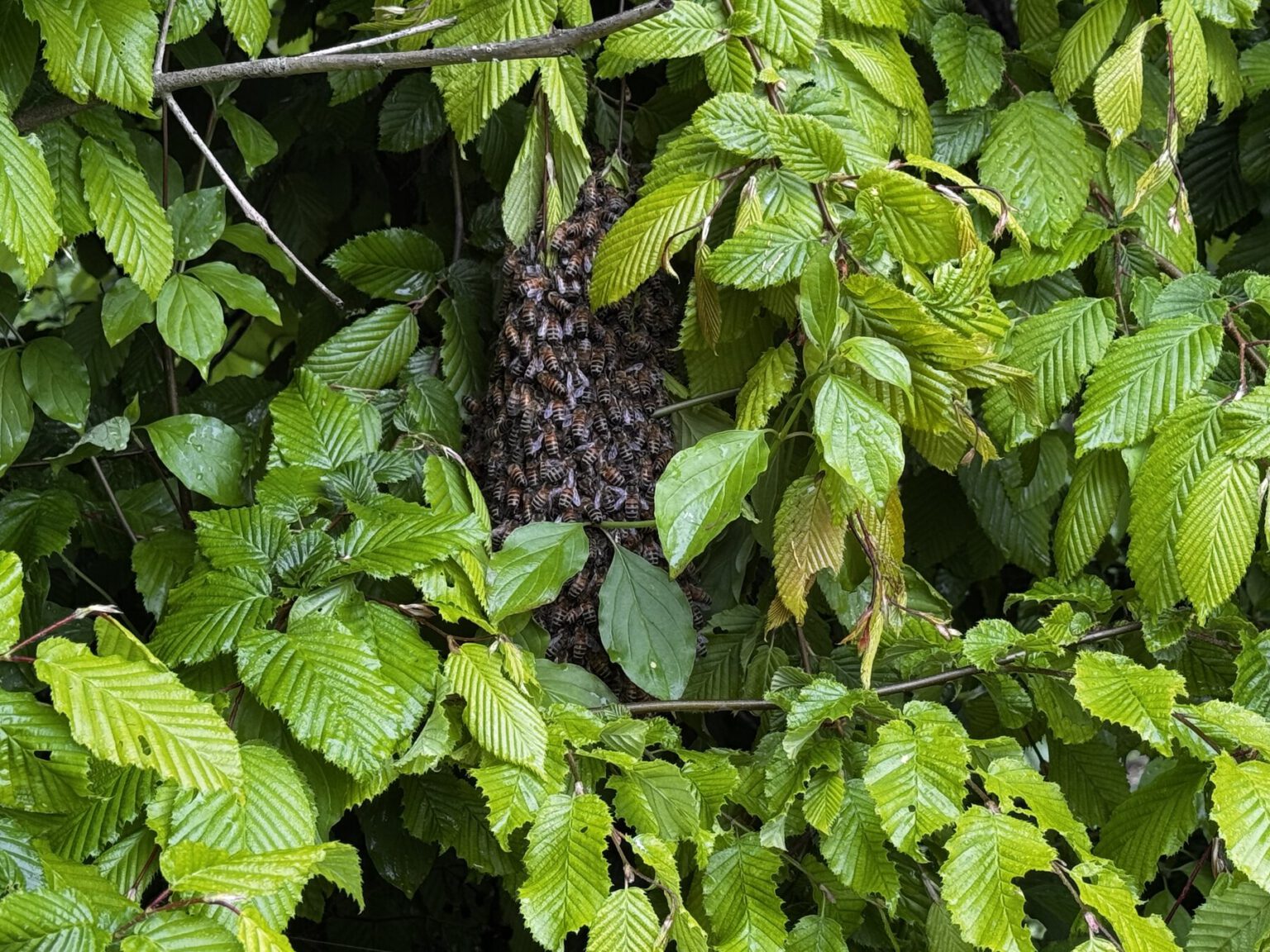
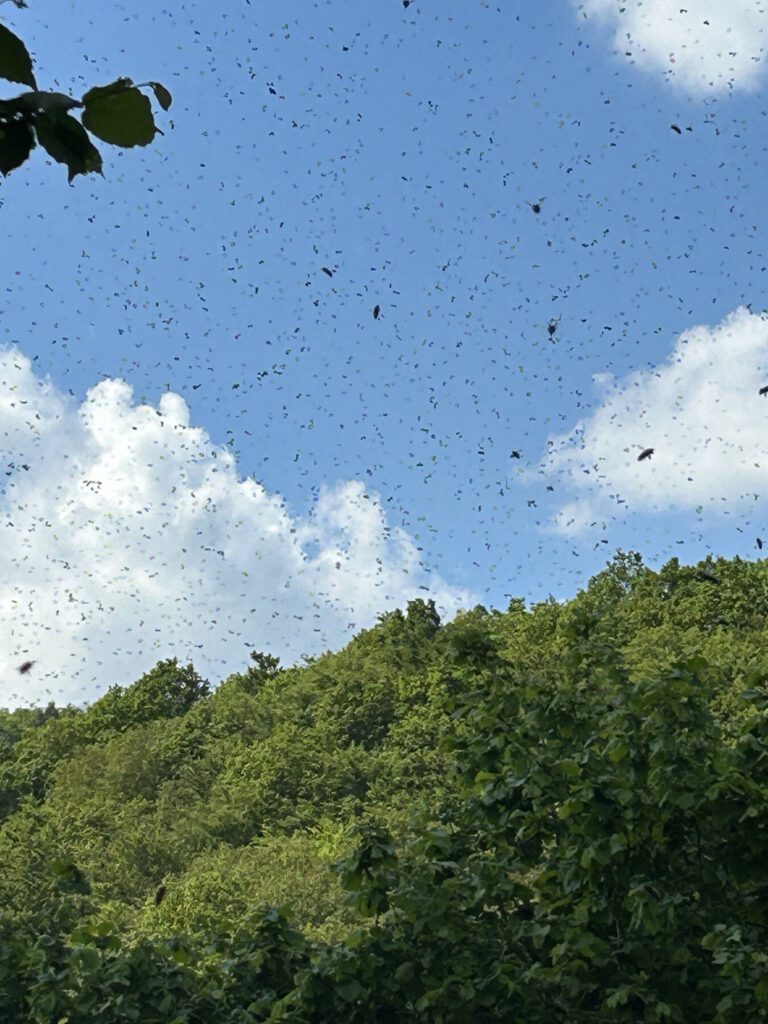
Sometimes the colony grows too large. Then the greatest operation of my life begins: swarming. The old queen leaves the hive with part of the colony. Chaos becomes a migration on tens of thousands of wings.
I may serve as a scout. I search for hollow trees, cavities and sheltered places. I assess their size, dryness, entrance and safety.
Then I return and dance for my discovery. Other scouts inspect it, agree and join the dance. A decision emerges without any chief or command: through swarm intelligence. Once enough of us are convinced, we lead the old queen to a new home.
At that moment, I am more than a bee. I am a pathfinder, an estate agent and a moving assistant for a flying state.
Special Abilities
I can produce royal jelly and brood food in glands in my head and use it to nourish larvae and the queen.
I can turn nectar into honey by passing it on, adding enzymes and removing water.
I can produce wax from my own body and use it to build honeycomb.
I can navigate by the sun, the landscape, scent and experience.
With the waggle dance, I can communicate the direction, distance and quality of a source.
I can warm the brood nest, ventilate the hive and defend the colony.
Greatest Achievements
I survived the 21 days from egg to larva and pupa, and finally to worker.
I fed brood before it knew it was alive.
I produced royal jelly, the substance that makes a queen possible.
I built honeycomb, stored honey and pollinated plants.
As a scout, I helped an old queen and her swarm find a new home.
I supplied, protected and helped reproduce my colony, even though my summer life lasts only a few weeks.
Risks of the Job
Outside, I face rain, cold, heat, spiders, birds, windscreens, pesticides, hunger and exhaustion. Inside, there are Varroa mites, viruses, food shortages, robbing by other bees and the threat of disorder.
I have no holidays. No retirement. No end of the working day. I have a task.
The End of Life and a Legacy
After about six weeks of summer life, my wings are frayed and my body is spent. One day, I may not return. No grave. No monument. Only one voice less in the hum.
People often see only the jar of honey. They do not see the 21 days before I emerged, the brood food made in my head, the dances in the dark or the torn wings at the end. I am small enough to be overlooked, yet important enough that an entire world would be poorer without me.
Now comes
the sky.
The Life of a Queen Bee
From a larva raised in abundance to the mother of an entire colony
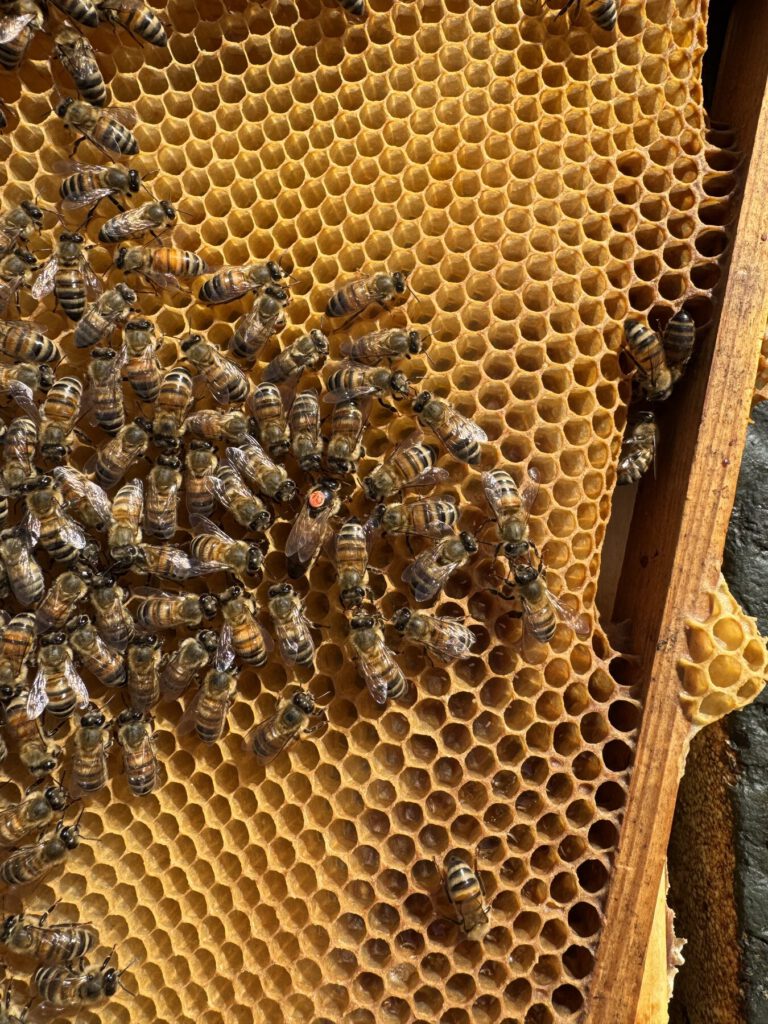
Personal Profile
I begin like every other bee: as a tiny egg. No larger, no more golden, no more royal. My future rank is not determined by the egg itself, but by the way I am fed.
While other larvae receive brood food only briefly before changing to a mixture of honey, nectar, pollen and bee bread, I am treated differently without compromise. I receive royal jelly – abundantly, continuously and throughout my life. During my larval stage, this special food allows me to develop into a queen. Even after I emerge, the workers in my retinue continue feeding me. An ordinary female larva thus becomes a queen who will remain dependent on her daughters for her entire life.
My body is not built for foraging flights. It is built for offspring. I become larger, heavier, longer-lived and more fertile than my sisters. My task is brutally simple and immense at the same time: I must carry a colony into the future, egg by egg.
My Beginning, Day by Day
Day 0: The queen lays me as a fertilised egg in a queen cell that opens downwards. Nothing yet distinguishes me from a future worker.
Days 1 to 3: My development begins inside the egg. From the outside, only a tiny white sliver can be seen. Inside, my first body begins to form.
Day 3: I hatch as a larva. From now on, I am fed royal jelly without interruption: first by nurse bees throughout my larval stage, and after I emerge by the workers in my retinue.
Days 4 to 8: I grow faster than a worker larva in my spacious queen cell. The continuous royal diet changes my body: my ovaries and reproductive organs develop fully.
Around day 8: My cell is capped. In the dark, I begin to pupate. The soft larva becomes a queen with wings, antennae, compound eyes and a long abdomen.
Days 9 to 15: My body is completely rebuilt. While workers remain in their cells for several more days, my development is already nearing its end.
Day 16: Only 16 days after the egg was laid, I open my queen cell and emerge. I develop faster than a worker or a drone. Yet my emergence merely marks the beginning of the struggle for my place.
My Role in the Colony
Day 16: Emerging into a dangerous world. If several young queens develop in the colony, a silent power struggle begins. A colony normally needs only one reigning queen. Rivals may be killed before they even emerge. My first duty is not ceremony. My first duty is survival.
Around days 20 to 25: Orientation flights and mating flight. I do not leave the hive to forage, but for a single decisive phase of my life. At drone congregation areas, I meet drones from the surrounding region. I mate with several of them in the air. They die in the process. I return with a store of sperm that can last for years.
From around day 26: Egg laying begins. Now I become the centre of the colony. I lay fertilised eggs for workers and new queens, and unfertilised eggs for drones. At peak times, the number I lay each day can be astonishing. My abdomen becomes the colony’s production line.
My reign is not a system of commands. I give no work instructions. My queen pheromone signals: I am here, the colony is in order, reproduction is secured. My daughters sense me, tend me, feed me, guide me and spread my scent throughout the hive.
Special Abilities
- I can emerge from a fertilised egg and, through continuous feeding with royal jelly, develop into a life entirely different from that of a worker.
- During just a few mating flights, I can mate with several drones and store their sperm in my spermatheca for years.
- I can decide whether to fertilise an egg: fertilised eggs become workers or queens, while unfertilised eggs become drones.
- With pheromones, I can stabilise the colony’s social order.
- When the colony prepares to swarm, I can leave with part of it and thereby enable the colony to reproduce as a whole.
- I can live for several years, while a summer worker often survives for only a few weeks.
My Greatest Achievements
I brought a colony into being from a single body. Not symbolically, but literally. Egg by egg, comb by comb, generation by generation.
I produced thousands of daughters: nurses, builders, guards, foragers and scouts. I do not fly to the flowers, but through my daughters my influence reaches for kilometres into the landscape.
I helped found a new colony. When the hive becomes too crowded and the urge to swarm grows, my egg laying is reduced, my body becomes able to fly again, and eventually I leave the old home with thousands of workers. Scouts search for a new place to live. I am the living heart they take with them.
I survived, even though my position is never guaranteed. If my performance declines, the colony raises a successor. A queen is powerful, but never untouchable.
Risks of Royal Life
My life is longer than a worker’s, but no safer. Birds may eat me on a mating flight; I may lose my way or fail to return. I may mate poorly, be injured or be replaced by the colony.
I depend on my daughters. They feed, clean, warm, protect and guide me. Without them, I am no ruler. Without them, I am a single insect with a large abdomen and a short future.
Legacy
Humans call me a queen and imagine a crown, power and commands. The truth is different. I am no monarch in the human sense. I am the colony’s living reproductive organ, sustained by care, scent and expectation.
I was not born to be free. I was born to become a colony.
Her sky
was brief.
The Life of a Drone
Born without a father, made for a single flight with a fatal ending
Personal Profile
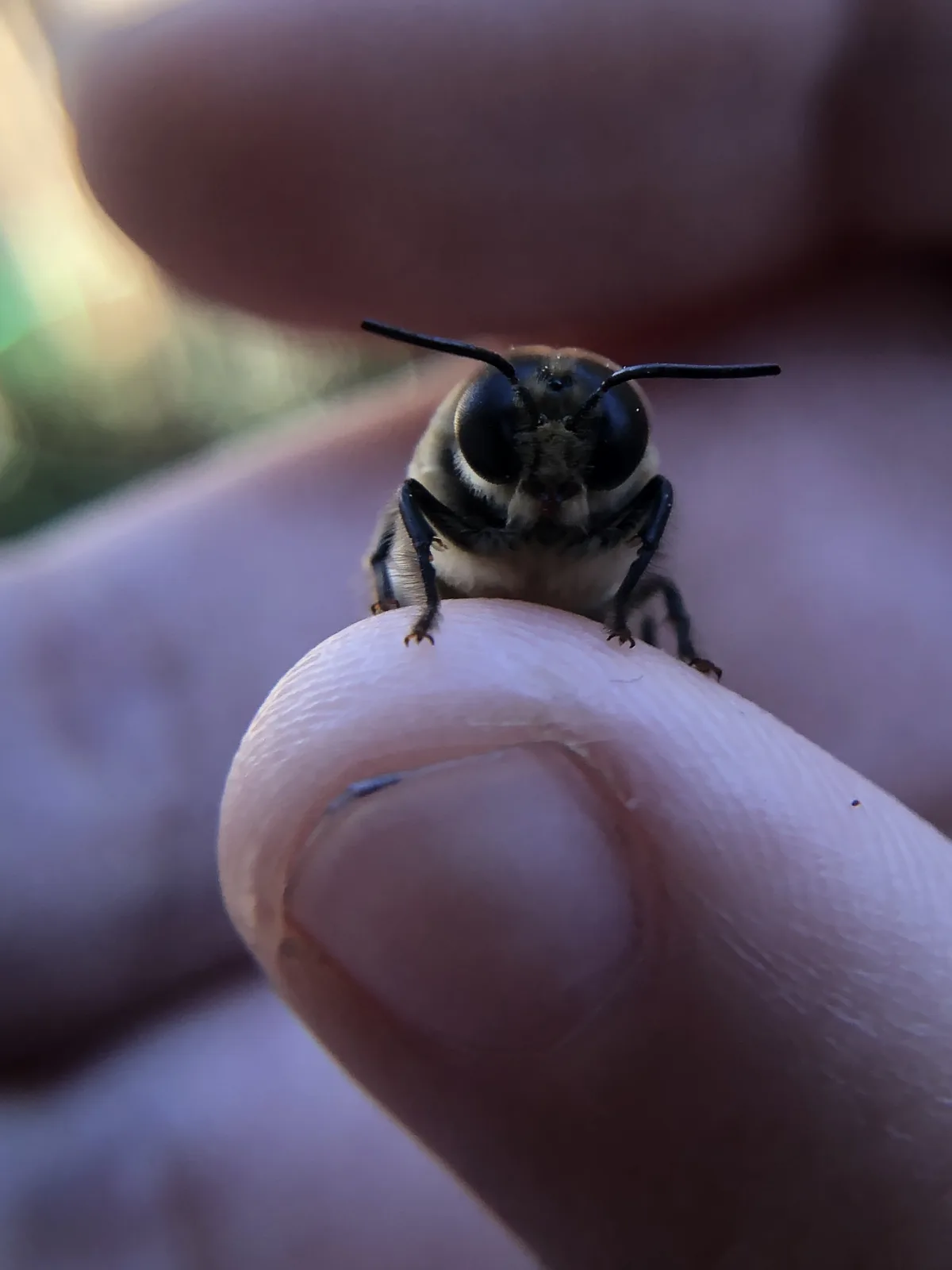
I am the one people tend to laugh at in the bee colony: large, round, loud, without a sting, without pollen baskets, without a career in honey. I clean no cells, feed no larvae and defend no entrance.
But anyone who sees me merely as another mouth to feed does not understand the bee colony. I am no worker. I am a flying genetic message. My purpose is not daily life. My purpose is reproduction.
I develop from an unfertilised egg. That means I have a mother, but no father. My genes come directly from the queen. Biologically, I am a risky, noisy and energy-hungry investment in the next generation.
My Beginning, Day by Day
Day 0: The queen lays me as an unfertilised egg in a larger drone cell. I have a mother, but no father.
Days 1 to 3: My development begins inside the egg. My single set of chromosomes carries only the queen’s genetic material.
Day 3: I hatch as a larva. Nurse bees feed me. I grow quickly and need more space than a worker.
Days 4 to 10: I eat, grow and fill my spacious cell. My future body becomes large, powerful and designed for the flight to a queen.
Around day 10: My cell is closed with a distinctly domed cap. Beneath it, pupation begins.
Days 11 to 23: In the dark, my large compound eyes, powerful flight muscles, wings and reproductive organs develop. I do not grow a sting.
Day 24: Twenty-four days after the egg was laid, I chew my way out of the cell. I am an adult drone, but not yet sexually mature. I need several more days within the colony’s protection.
My Role in the Colony
Day 24 to around day 35: A young drone in the hive. I am cared for, fed and tolerated. Unlike a worker, I cannot properly feed myself and depend on the colony’s stores and care. My main task has not yet begun. My body is maturing.
From about my second week as an adult drone: Flight training and excursions. I do not leave the hive to collect nectar. I fly to drone congregation areas, invisible meeting places in the sky where drones from many colonies wait for young queens.
My body is built for this moment. My large compound eyes help me recognise queens in flight. My flight muscles carry me into the air. My purpose is not survival. My purpose is to find my mark.
If I mate with a queen, my life ends immediately. My reproductive organ is torn from my body; I fall and die. It sounds cruel. For a drone, it is the greatest possible success.
Special Abilities
- I develop from an unfertilised egg and therefore pass on only my mother’s single set of chromosomes.
- I have no sting and cannot defend the colony.
- I collect no nectar, pollen or propolis.
- I have especially large eyes to recognise queens in flight.
- At drone congregation areas, I can wait for young queens alongside many other drones.
- During a mating flight, I can pass my genes to a queen and thereby influence future colonies.
- I can generate warmth in the hive, although I also consume the colony’s stores.
My Greatest Achievements
I am part of the colony’s genetic strategy. Without drones there is no mating; without mating, no successfully mated queens; without queens, no new and strong colonies.
I connect colonies. A young queen does not mate with her own brothers inside the hive, but with drones from the surrounding area out in the air. In this way, genetic diversity is carried into the next generation.
If I succeed, I do not survive my triumph. My death is no accident. It is the price of reproduction. While workers labour for the colony, I make my contribution in a single moment.
Even if I never reach a queen, my life was not pointless. My very presence shows that the colony is strong enough to invest in reproduction. Drones are luxury, risk and future all at once.
The End of the Season
In spring and summer I am tolerated, fed and needed. But when the nectar flow wanes and winter approaches, the mood in the colony changes.
Then the expulsion of the drones begins. Workers drive us from the hive, deny us access to the stores and drag us away from the entrance. We are too costly for winter. We do not forage, we do not provide enough warmth, and we feed no brood. The superorganism calculates without sentiment.
Those who do not die earlier on a mating flight often end up outside the hive: starving, exhausted, excluded. Not out of malice, but because a bee colony survives by knowing no sentimentality.
Risks in a Drone’s Life
Birds may eat me in flight; I may exhaust myself, never reach a queen or be driven from the hive at the end of the season. My life is comfortable until, suddenly, it is not.
I have no sting, no defence, no career ladder and no second task. I am specialised. And specialisation is always dangerous in a bee colony.
Legacy
People often see me as the hive’s idler. They see the heavy body, the noisy flight and the appetite. They do not see the biological purpose behind them.
I am the colony’s wager on the future. I am neither a forager nor a soldier. I am a flying carrier of genetic material with an expiry date.
My life has only a few possible endings. The harshest is to be cast out. The greatest is to die in flight at the exact moment my genes live on.
Success is
passing life on.
The Colony Remains
The worker dies after a life of labour and flight. The queen may live for years, yet one day she too will be replaced. The drone passes on the future or ends with the summer.
None of these lives carries the meaning of the whole by itself.
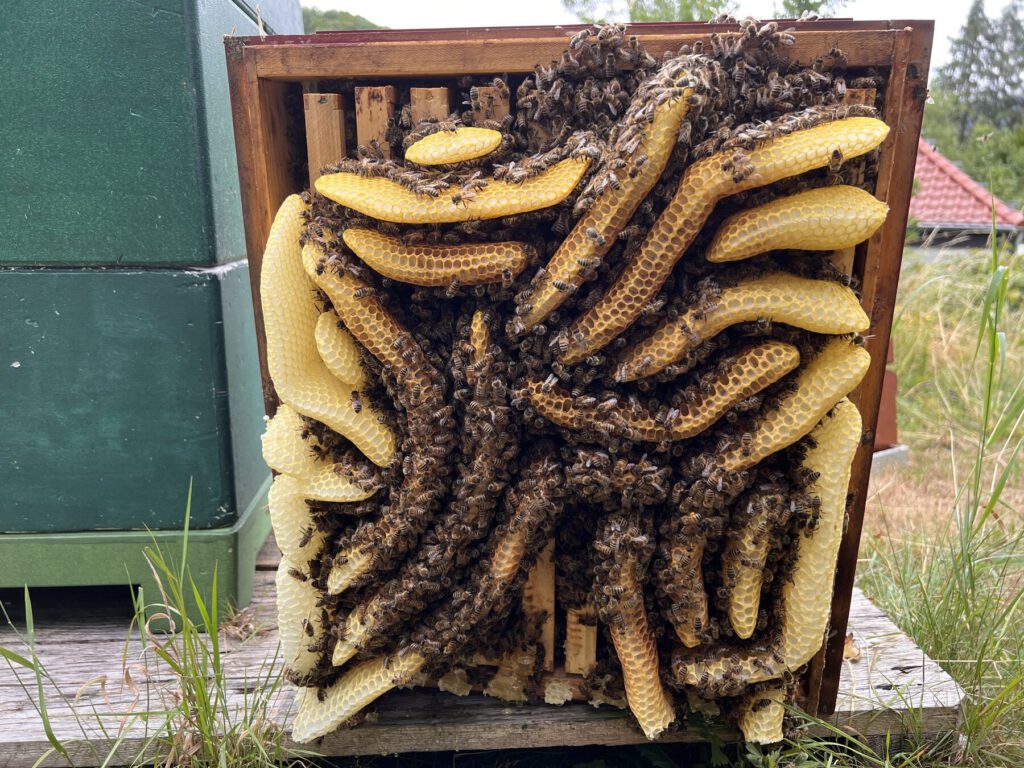
A bee colony is more than the sum of its individuals. It warms itself, feeds itself, remembers routes, renews its bodies and endures through generations.
In winter, the workers draw close together. In their cluster, their muscles generate warmth. Slowly, the colony moves through its stores.
When the days begin to lengthen again, the queen starts laying. New workers emerge. Later, new drones appear. Perhaps the colony will raise new queens and divide.
No single bee knows the entire plan. And yet scent, touch, food, warmth, dance and a thousand small decisions create one shared life.
The individual bee passes away.
The colony remains.
Philipp Ballier
Philipp Ballier is a beekeeper. Together with his son Johannes, he runs a small-scale apiary in Kassel. Their work combines close observation of bee colonies with the question of how nature can be told in a way that brings together knowledge, wonder and responsibility.
