Bergpark Wilhelmshöhe.
A landscape full of stories.
Garden history above.
Bee life all around.
Meadows, mature trees and the slopes of the Habichtswald surround our apiary in Bergpark Wilhelmshöhe.
On a walk through the park, you see a carefully designed landscape. Our bees experience it differently: they leave the hive, find food and return home. The place we know as a World Heritage Site is part of their everyday world.
Discover our Bergpark apiary →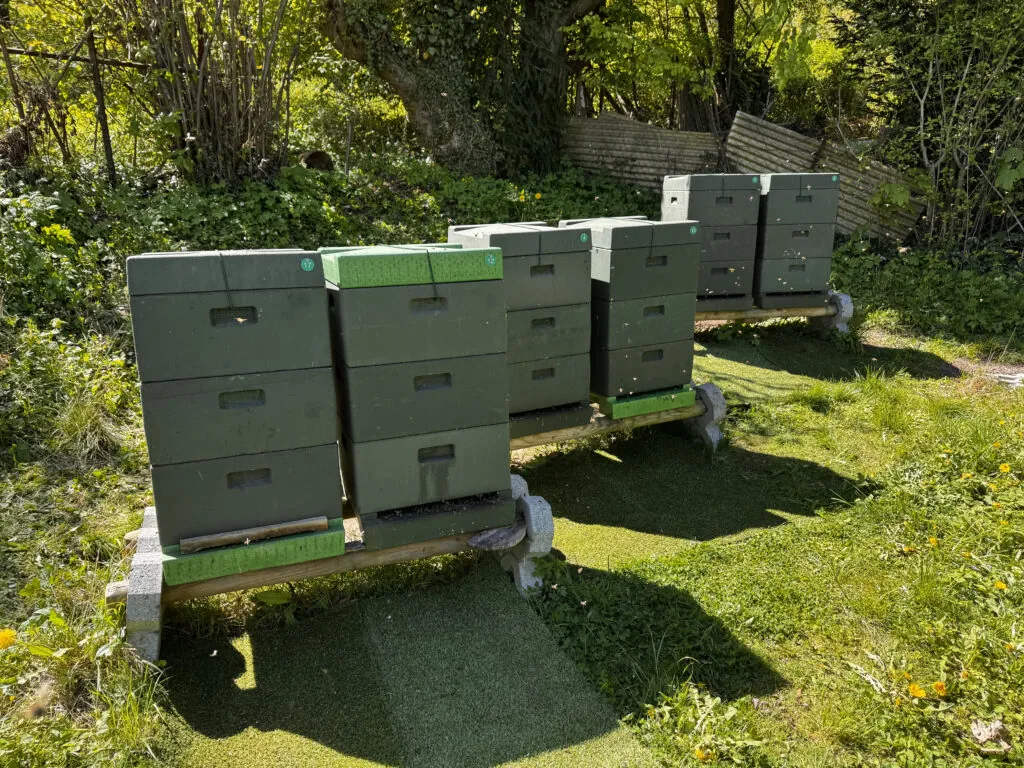
From Baroque garden to living landscape.
Landgrave Carl began developing the monumental waterworks in 1689. Later generations expanded the ensemble and shaped the landscape garden. The park brings together Baroque design and the garden art of later periods.
The historic water features are particularly striking. They are driven by the natural slope: water from reservoirs higher up the hill flows through the system to create cascades, waterfalls and fountains, without pumps.
Bergpark Wilhelmshöhe was inscribed on the UNESCO World Heritage List in 2013. The designation recognises the cultural landscape, its historic structures and its waterworks.
Park history: Hessen Kassel Heritage and UNESCO. Water features: Hessen Kassel Heritage.
What makes the Bergpark so special
A park where water flows without pumps, centuries of garden design endure and the landscape continues to thrive.
240 hapark grounds
The park was laid out on a steep hillside. Its paths link gardens from different periods with the Hercules monument and Wilhelmshöhe Palace. Hessen Kassel Heritage gives an area of around 240 hectares for the park grounds. UNESCO lists 558.7 hectares for the inscribed World Heritage property. We reproduce each figure with the description used by its source.
750,000 lof water per display
Around 750 cubic metres of water flow through the historic water features during each display. That is 750,000 litres.
0 pumpsgravity alone
The water features use the park's natural slope. Gravity and water pressure alone power the cascades, waterfalls and fountain.
since 2013UNESCO World Heritage
The park and its historic water features became a UNESCO World Heritage Site in 2013. Garden design and hydraulic engineering form a single historic ensemble.
300+ yearsof garden design
Baroque gardens sit alongside later landscape designs. A walk through the park reveals traces of these different periods.
2.3 kmof water features
Following the water features downhill from the Hercules monument towards Wilhelmshöhe Palace involves a walk of about 2.3 kilometres.
52 mthe Great Fountain
The Great Fountain in the fountain pond marks the end of the water display. Natural water pressure sends it soaring upwards.
71 mthe Hercules monument
The height refers to the whole monument, not just the statue. The City of Kassel gives a height of 71 metres; Hessen Kassel Heritage lists it as 70 metres. A pyramid topped by the figure of Hercules rises above the octagonal building.
1,000 rosesRose Island and its surroundings
Shrub, wild and climbing roses grow below the palace, near the Lac lake. Volunteers help care for the collection. It extends across Rose Island and its surroundings.
200+ yearsthe age of old trees in the park
Some trees have stood here for more than two centuries. They are as much a part of the historic park as its paths and buildings.
Sources for the Bergpark facts
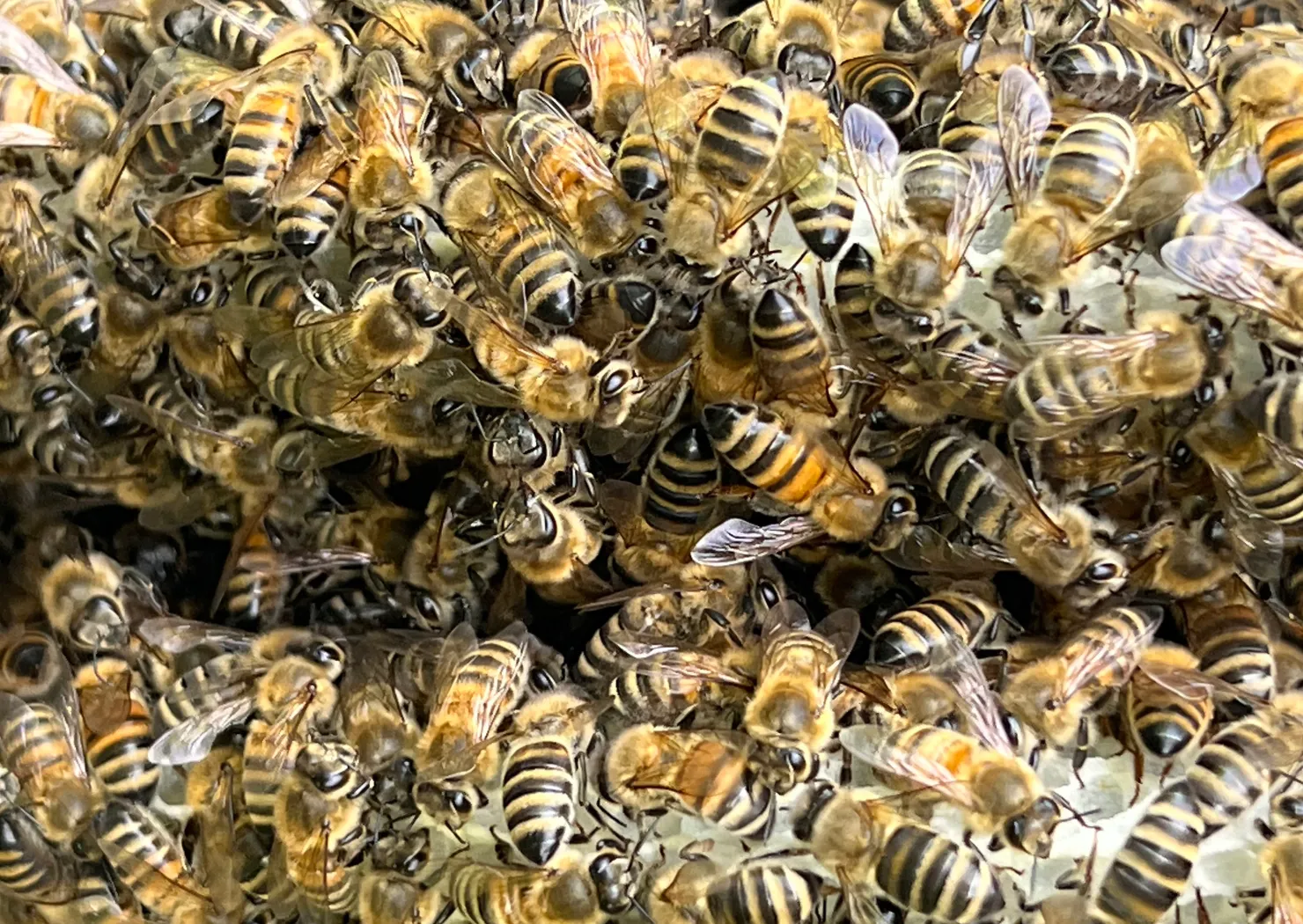
The Bergpark is its home. The season shapes its character.
What the bees bring back depends on flowering, weather and the time of year. Our Welterbe-Honig therefore has no fixed flavour formula: it is the harvest of this particular apiary.
We process spring and summer harvests separately, and keep both apart from the honey harvested at our other locations. The name Welterbe-Honig tells the story of that geographical origin.
Discover our Bergpark honey →A closer look at life among the flowers.
A bee on a flower offers a glimpse of a much larger story. Bienenleben.info explores how pollination works, the long relationship between bees and flowers, and the diversity of wild bees.
Articles in German.