Our bees
in Bergpark Wilhelmshöhe.
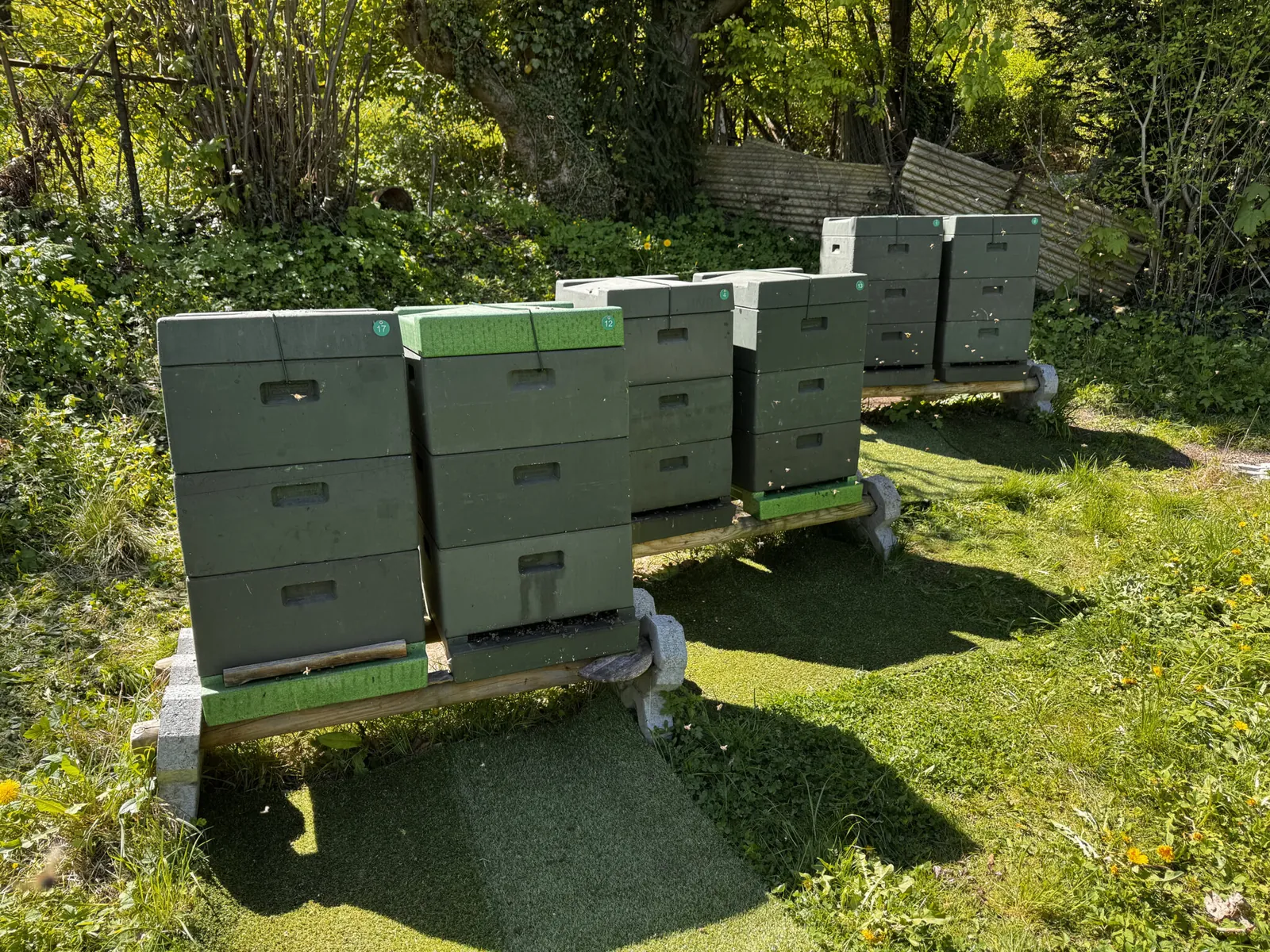
Green hives, sunlight between the trees and bees coming and going at the entrances. A small part of a much larger landscape.
This photograph shows the home of our Bergpark colonies. From here they forage in the surrounding landscape. Here, too, we gather the honey harvest whose origin we preserve all the way to the jar.
The apiary connects the park with our daily work. Johannes and Philipp care for the colonies themselves, follow their development and harvest their honey.
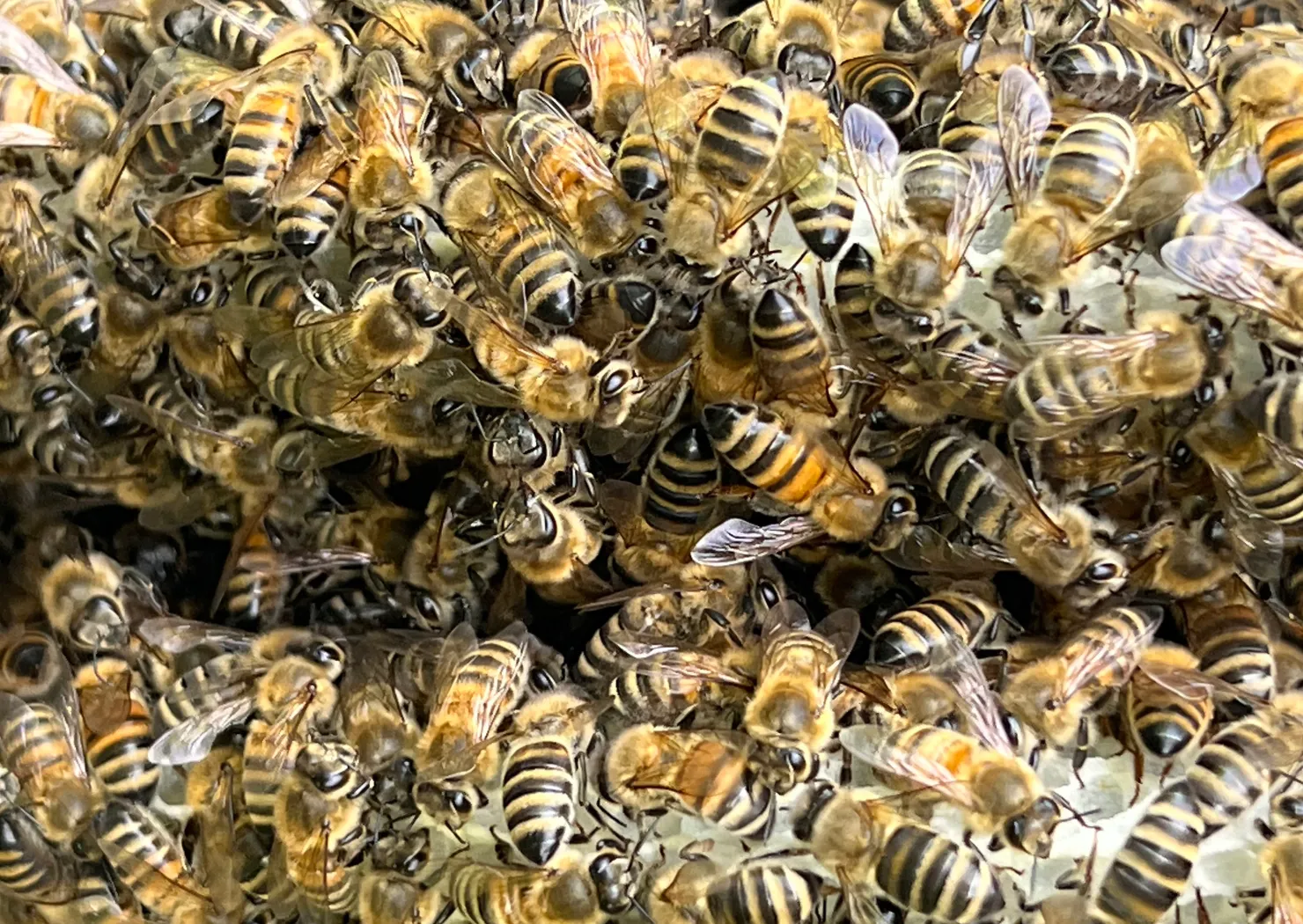
The bees' year keeps changing.
As spring gives way to summer, the food available around the apiary changes. The bees respond to the flowers and the conditions they find. No two seasons unfold in quite the same way, and each harvest has its own flavour.
We keep the Bergpark apiary's spring and summer harvests separate. Each jar retains a clear connection to its season and place. This does not promise honey from any one flower: the honey comes from what the bees actually bring back.
Explore the two Bergpark harvests →An apiary tells you more than a place name.
The Bergpark has its sweeping views from the Hercules monument, but also its quieter details: shade beneath a tree, grass between the paths, a bee at a hive entrance. Our apiary offers a way to see this side of the place.
We keep its harvest separate from those of our other apiaries. We also care for colonies elsewhere in Kassel and northern Hesse; this website tells the story of our honey from Bergpark Wilhelmshöhe.
Meet Johannes and Philipp →How individual bees form a colony.
At our hives, you can watch the bees coming and going. Bienenleben.info explains what happens inside, how the bees share their work and how a colony changes through the year.
Articles in German.
- Division of labour: Who does what in the hive ↗
- The bee year: A colony through the seasons ↗
- Swarming: When a colony divides ↗
For a more personal view, read the worker bee's chapter in “Three Lives. One Colony.” The story is available here in English.